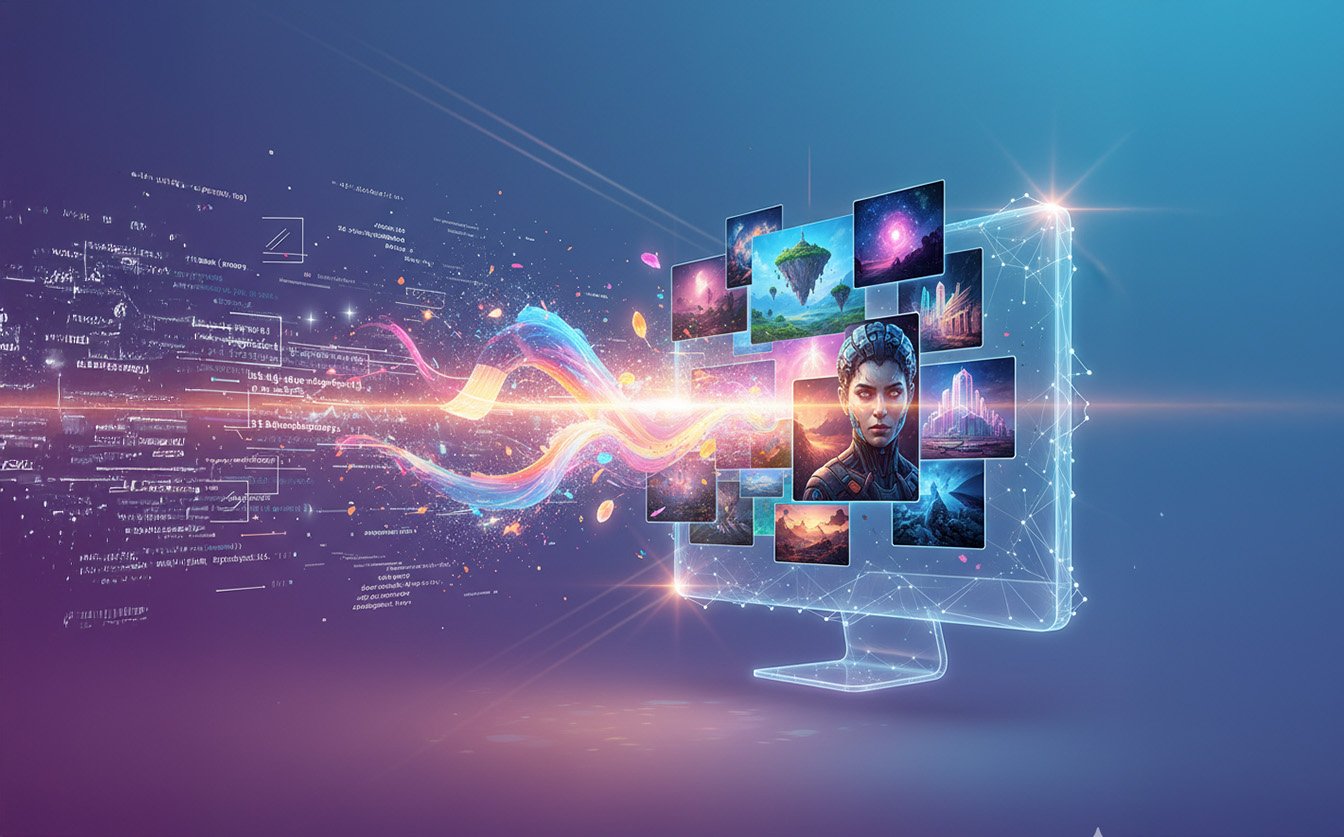
Learn how to write clear, effective image prompts for AI models like Nano Banana and Midjourney, the two most powerful and widely used image generators today.
Image prompting means describing what you want to see so clearly that the AI can visualize it.
Instead of giving instructions, you describe a scene. What’s there, how it looks and the atmosphere you want.
This guide focuses mainly on Nano Banana and Midjourney, two of the most advanced and popular image models available.
Both can turn your words into stunning visuals, but they work a little differently.
| Element | Question to Ask Yourself |
|---|---|
| Subject | Who or what is in the image? |
| Composition | How is it framed or positioned? |
| Action | What is happening? |
| Location | Where does it take place? |
| Style | What aesthetic or medium fits best? |
| Lighting | What kind of light or mood? |
| Color Palette | Warm, cool, muted, bold? |
| Mood | What feeling should it give? |
| Aspect Ratio | (Optional) e.g., 16:9, 9:16 |
| Editing Instruction | (Optional, for edits) What should change? |
Image generation example
A minimalist living room, wide shot, centered composition, airy loft in Copenhagen, interior design catalog style, soft north light, neutral palette, calm mood.
Image editing example:
Change the sofa color to deep navy blue and add a stack of books on the coffee table.
These principles work across any image generator, including Nano Banana, Midjourne and others.
1. Start with Natural Language
Describe the image as if you were telling someone what to paint. Be clear and specific; avoid vague words like “nice” or “cool.”
2. Build Prompts Step-by-Step
Think in layers: Subject → Environment → Style → Lighting → Mood → Extras
3. Change One Variable at a Time
Adjusting one thing (e.g., lighting or color palette) per run helps you learn how the model responds.
4. Reference Images Are Gold
Whenever possible, pair your prompt with an uploaded image to keep identity, pose, or layout consistent.
5. Use Plain Language for Edits
If the model supports editing (like Nano Banana), be direct:
Replace the background with a cozy living room.
Remove the car in the corner.
Nano Banana is Google’s next-generation image model. It excels at realism, precision, and consistency, especially across multiple prompts or edits.
1. Descriptive Prompting
For realism and detailed control.
A 4K photorealistic portrait of a curly-haired golden retriever mid-jump into a pile of autumn leaves, golden-hour light, shallow depth of field, warm tones.
2. Character Consistency
Preserve identity and key features across images.
- A whimsical illustration of a glowing mushroom sprite with a bioluminescent cap and vine-like body.
- Now show the same sprite riding a moss-covered snail through a sunlit meadow.
3. Local, Precise Edits
Conversational editing with clear instructions.
- Modern living room with gray sofa, wooden coffee table, and potted plant.
- Change the sofa color to deep navy blue.
- Add a small vase on the table.
4. Style Transfer
Change aesthetic without altering the subject.
Apply the look of an architectural line drawing to this motorcycle photo.
5. Concept Blending
Combine two or more ideas.
- Generate a photorealistic astronaut.
- Generate a rainforest basketball court.
- Now show the astronaut dunking a basketball in that court.
6. Logical Sequences
Ask for cause-and-effect or storytelling continuity.
- A chef holding a three-tier cake.
- Show what happens if they trip.
Midjourney specializes in visual style, mood, and composition.
It’s parameter-driven and excels at artistic, cinematic, and conceptual results.
1. Style Prompting
Define the artistic look.
Editorial fashion photo on 35 mm film, soft grain, minimal studio set, high-key lighting, neutral palette.
2. Composition and Camera Control
Influence framing and angle.
Wide-angle establishing shot, low-angle perspective, subject centered foreground, city skyline background --ar 16:9
3. Parameter Prompting
Adjust subject emphasis and exclusions.
space station interior::1 astronaut portrait::2 cinematic lighting, volumetric fog --ar 9:16 --no text
4. Weighted Emphasis
Increase focus on one concept by giving it higher weight (
::2or more).
Decrease importance with lower weights.
5. Negative Prompting
Use --no to remove unwanted elements:
--no text,--no people,--no watermark
:: weights and --no for balance--ar, not all compositions adapt perfectlyEven powerful models struggle when prompts are unclear or overloaded. These are the issues most beginners run into:
Use Nano Banana when you need precision, editing, and character consistency.
Use Midjourney when you want strong artistic direction, composition control, and fast style exploration.
Both together cover nearly every modern image-generation workflow in 2025.
 promptsDB